
You built a website. You paid someone to design it, or maybe you put it together yourself on a Saturday afternoon. It looks decent. The phone number is there. The address is there. And yet when someone in Colorado Springs types “[your service] near me” into Google, you’re nowhere to be found.
This is not a mystery. There are specific, fixable reasons Google ignores most small business websites — and most of them have nothing to do with how the site looks. Here’s what’s actually happening, and what you can do about it.
Google Ranks Relevance, Authority, and Speed — In That Order
Before we get into the specific problems, it helps to understand what Google is actually doing when it ranks results. It’s trying to give the searcher the most useful answer, as fast as possible, from a source it trusts. Every ranking signal — keywords, backlinks, page speed, mobile friendliness — is Google trying to answer three questions:
- Is this page relevant to what the person searched?
- Does this site have authority — do other credible sites link to it, does it have consistent business information across the web?
- Is this page fast and easy to use on a phone?
Most small business websites in Colorado Springs fail on all three. Here’s how.
Problem 1: Your Pages Don’t Say What You Do or Where You Do It
This is the most common problem, and the most fixable. A page that says “Welcome to our website. We provide quality services to our valued customers” tells Google absolutely nothing. It doesn’t know what you do, who you serve, or where you’re located.
Google needs to see specific language — on the page, in the headings, in the page title — that matches what people are actually searching for. A plumber in Colorado Springs should have pages that explicitly say things like “emergency plumber in Colorado Springs,” “water heater replacement near Briargate,” or “drain cleaning service Colorado Springs CO.” Not stuffed awkwardly into every sentence — just written naturally into content that actually answers the question a searcher has.
If your homepage headline is your business name and nothing else, you’re invisible to Google for every search that matters.
Problem 2: Your Website Is Slow
Page speed is a direct ranking factor. Google measures how long it takes for your page to load and become usable on a mobile device, and it penalizes slow sites in search rankings. More importantly, real humans leave slow pages — studies consistently show that more than half of mobile visitors abandon a page that takes longer than three seconds to load.
WordPress sites — especially ones running heavy themes and a pile of plugins — are notoriously slow. A fresh WordPress install with a popular theme and ten common plugins can easily take five to eight seconds to load on a mobile connection. Every second over three is costing you visitors and rankings.
Hand-coded websites load in under a second. There’s no database query, no plugin stack, no bloated theme framework — just clean HTML and CSS delivered directly to the browser. Speed is one of the reasons we build websites the way we do at Milestone Web Design.
Problem 3: You’re Not in Google Business Profile (or Your Listing Is a Mess)
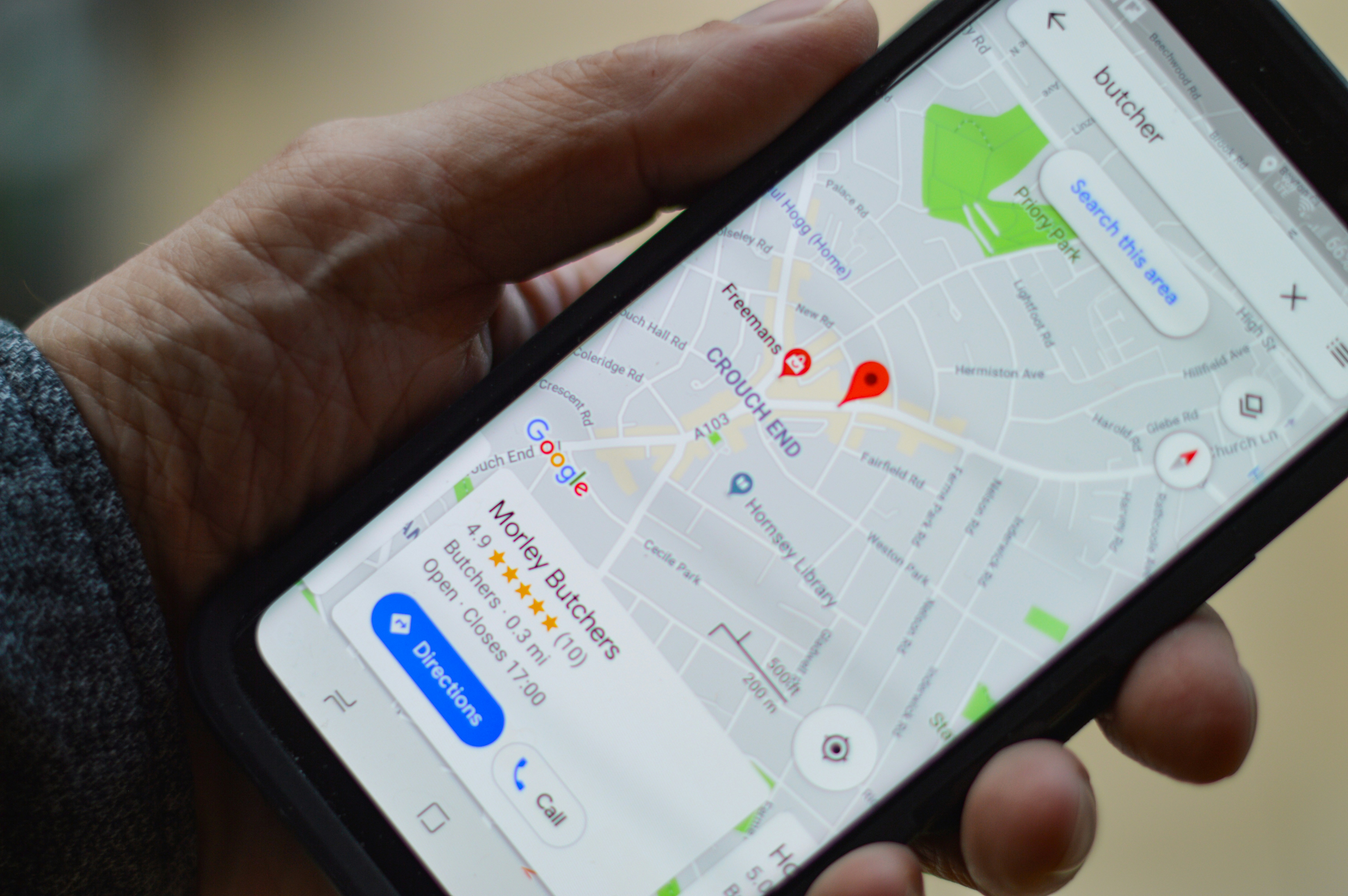
When someone searches “electrician Colorado Springs” or “best pizza near me,” the results that show up in the map pack — the three local listings with the map pins — come from Google Business Profile (formerly Google My Business), not from your website.
If you haven’t claimed your Google Business Profile, you’re not eligible to appear in that map pack at all. If you have claimed it but your information is incomplete, inconsistent, or you have no reviews, Google will rank other businesses above you.
The basics that matter most:
- Claimed and verified listing
- Correct name, address, and phone number — matching exactly what’s on your website
- Business category set correctly (not just “business” — the specific category)
- At least ten reviews, with a rating above 4.0
- Photos of your work, your team, or your location
- Hours of operation filled in
NAP consistency — Name, Address, Phone — matters across the entire web. If your phone number on your website doesn’t match what’s on Yelp, which doesn’t match what’s on your Google listing, Google loses confidence in your business and ranks you lower. It sounds picky, and it is.
Problem 4: Nobody Links to Your Website
Google treats links from other websites as votes of confidence. A site with twenty reputable websites linking to it will almost always outrank a site with zero inbound links, everything else being equal. This is called domain authority, and it’s built over time.
For a new website, this is the hardest problem to solve quickly. But there are legitimate ways to start building it:
- Get listed in local business directories — Colorado Springs Chamber of Commerce, BBB, Nextdoor, local industry associations
- Ask satisfied customers to mention your business on their website or blog
- Sponsor a local event and get a link from the event page
- Write content that other local sites would want to link to
What doesn’t work: buying links, link farms, or directory spam. Google is good at identifying these and will penalize you for them.
Problem 5: Your Site Has No Content
A five-page website with 200 words per page gives Google almost nothing to index. There’s no signal of expertise, no answers to the questions your customers are asking, and no reason to rank you over a competitor with a 1,500-word service page and a blog with twenty articles.
Content is the fuel for SEO. Not fluff — actual useful content that answers the questions your customers type into Google. A roofing company in Colorado Springs that has a detailed page about hail damage repair, another about insurance claims, and a blog post explaining what to do after a hailstorm will consistently outrank a competitor whose website says “we fix roofs” and nothing else.
Writing good SEO content takes time. It also takes knowing which keywords to target — what people in Colorado Springs are actually searching, at what volume, and how competitive those terms are. We offer professional SEO content writing at 10¢ per word for clients who want this handled for them.
Problem 6: Your Website Isn’t Mobile-Friendly
Google uses mobile-first indexing, which means it evaluates the mobile version of your site — not the desktop version — when deciding how to rank you. If your site is hard to use on a phone — small text, buttons too close together, content wider than the screen — Google knows, and it counts against you.
More than 60% of local searches happen on mobile devices. Someone driving through Colorado Springs who needs a locksmith or a tow truck is searching on their phone. If your site isn’t built responsively, you’re invisible to most of the people looking for you.
Problem 7: Your Title Tags and Meta Descriptions Are Wrong (or Missing)
Every page on your website has a title tag — the text that appears as the clickable headline in Google search results. It’s also one of the most important signals Google uses to understand what a page is about. If your homepage title tag just says your business name, you’re wasting one of the most valuable pieces of SEO real estate on your entire site.
A title tag like “Colorado Springs Plumbing | Emergency Plumber | [Your Business Name]” tells Google exactly what the page is about and matches the search terms your customers are using.
Meta descriptions don’t directly affect rankings, but they affect click-through rates — and a page that gets clicked more often gradually moves up in rankings. A good meta description is 150–160 characters, answers the searcher’s question, and gives them a reason to click.
What to Do First
If you’ve read this far and recognize your business in several of these problems, here’s a practical order of operations:
- Claim and complete your Google Business Profile — this is free and has the fastest impact on local search visibility.
- Fix your NAP consistency — make sure your name, address, and phone number are identical everywhere on the web.
- Rewrite your homepage — lead with what you do and where you do it. Include your city and service area explicitly.
- Check your page speed — use Google’s free PageSpeed Insights tool. Anything below 70 on mobile needs attention.
- Add content — one well-written service page per service you offer, each targeting a specific search phrase.
- Get reviews — ask every satisfied customer to leave a Google review. Five genuine reviews will move the needle faster than almost anything else.
How Long Does It Take?
Honest answer: three to six months before you see meaningful movement in search rankings for competitive terms. Local search for less-competitive niches can move faster — sometimes four to eight weeks. SEO is not a switch you flip. It’s a compounding investment.
That said, Google Business Profile optimization and NAP cleanup can produce results in weeks. Getting into the local map pack for your city is often faster than ranking organically, and for most small businesses it’s more valuable.
When to Call Someone
If your website is on a slow platform, has no location-specific content, and wasn’t built with SEO in mind, the most efficient path is often a new website — not patching the one you have. A hand-coded site built around your target keywords, with fast load times, mobile-first design, and proper title tags from day one, will outperform a retrofitted WordPress site every time.
We’ve built websites for Colorado Springs businesses across a dozen industries — contractors, service providers, retail, professional services. Every site we build is optimized for local search from the ground up. If you want to know what that would look like for your business, Price Your Site and we’ll walk you through it.
Frequently Asked Questions
Do I need to pay for Google Ads to show up on Google?
No. Paid ads (Google Ads) appear above organic results and are labeled “Sponsored.” Organic rankings and the local map pack are free — they’re earned through SEO. Ads can get you immediate visibility while your organic presence builds, but they stop the moment you stop paying.
My competitor’s website looks worse than mine. Why are they ranking higher?
Google doesn’t rank websites on how they look — it ranks them on relevance, authority, and speed. Your competitor may have more content, more inbound links, a longer-established domain, more Google reviews, or better keyword targeting. A better-looking site that loads slowly and has no local content will lose to an ugly site that’s fast, well-linked, and keyword-optimized.
Can I do SEO myself?
Yes, and for many small businesses the basics — Google Business Profile, NAP cleanup, rewriting your homepage — are entirely doable without an agency. The harder parts are content strategy, technical SEO, and link building, which take more expertise and time. If your time is better spent running your business, it makes sense to hand those pieces off.
How much does SEO cost?
Agencies charge anywhere from $500 to $5,000 per month for ongoing SEO. For most Colorado Springs small businesses, the best starting point is a website built with SEO fundamentals already in place — that’s what we build — combined with a Google Business Profile that’s fully optimized. That gets you most of the way there without a monthly retainer.