
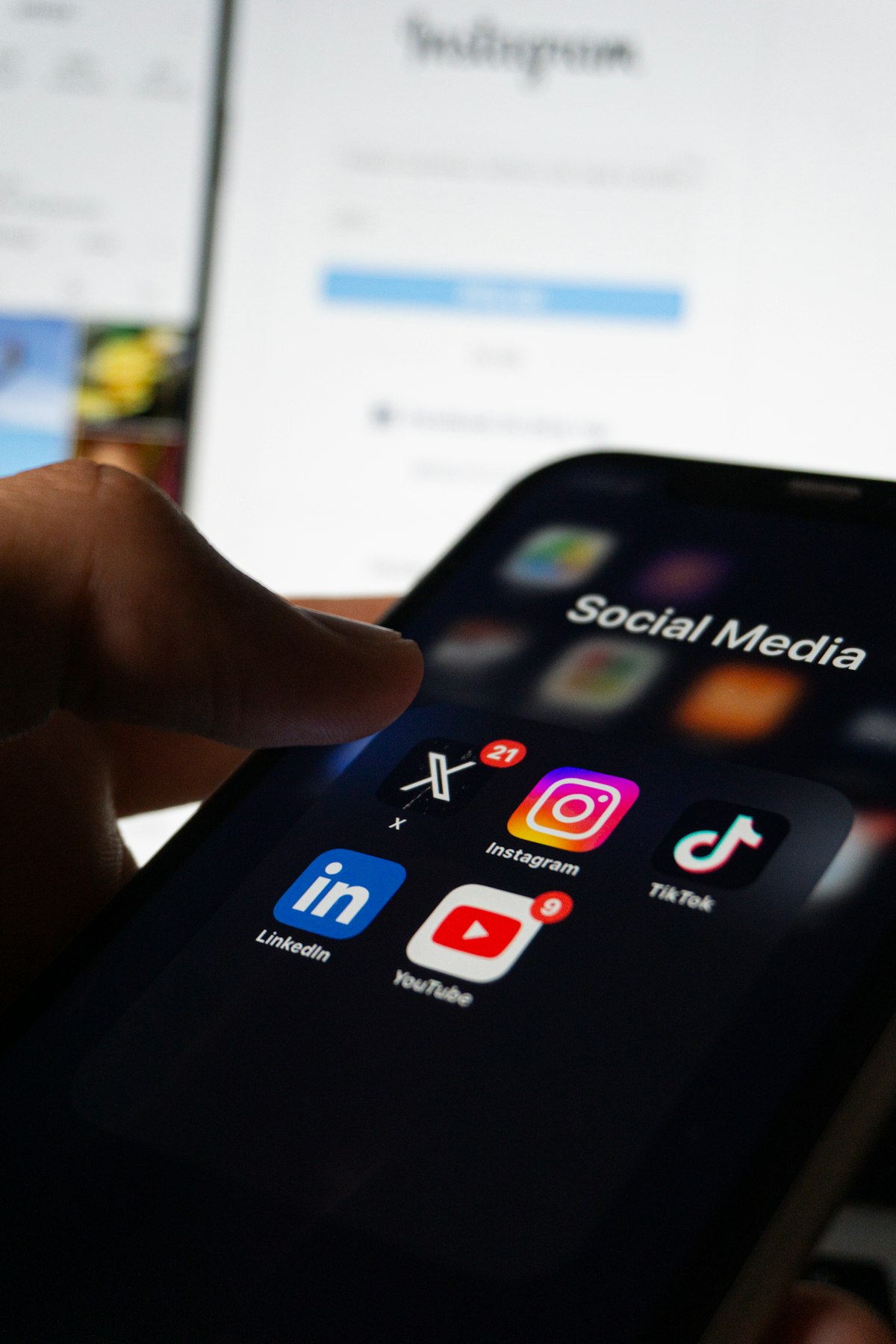
It’s a reasonable question. You have a Facebook page with good reviews. Your Google Business Profile is set up. You post on Instagram. Customers find you. Do you really need a website too?
Yes. And the reasons go deeper than “it looks more professional,” which is what most people say when they don’t want to think through the actual argument. Here’s the real case.
You Don’t Own Any of It
Your Facebook page, your Instagram profile, your Google Business listing — none of it belongs to you. You have an account on platforms owned by companies that have their own interests, their own algorithms, and their own ability to change the rules at any time.
Facebook has dramatically reduced the organic reach of business pages over the past decade — the same posts that used to reach thousands of followers now reach hundreds, unless you pay to boost them. Instagram can suspend your account for violating terms you may not have fully read. Google has changed what Google Business Profiles show and don’t show multiple times. You have no say in any of it.
A website is yours. The domain is yours. The content is yours. The files live on a server you control. No algorithm change can bury your homepage. No platform policy can lock you out of your own business presence. That ownership is worth something — especially for a business that plans to be around in ten years.
Google Organic Search Is Still the Most Valuable Traffic
When someone in Colorado Springs searches “best electrician near me” or “roof repair Fountain CO,” they’re actively looking to hire someone. That intent is more valuable than any social media impression, which is passive by definition. You don’t choose when an Instagram post appears in someone’s feed — and even when it does, they weren’t looking for you.
To rank in Google search — not just the map pack, but actual search results — you need a website. A Google Business Profile can get you into the local map pack, but the organic results below it require indexed web pages. A business with a website and active SEO strategy will consistently capture search traffic that a business relying only on social media will never see.
Social Media Is Rented Space
The simplest way to think about it: social media is rented; your website is owned. You build equity in a website over time — content accumulates, domain authority builds, search rankings improve. When you invest in a Facebook page, you’re building something on someone else’s land. If they decide to change the rent, you pay it or leave.
Businesses that built their entire presence on platforms have been burned by this repeatedly. The right strategy uses social media as a top-of-funnel tool to drive people back to your website — not as a replacement for one.
A Website Works While You Sleep
A Facebook post has a lifespan of a few hours before it disappears into the feed. A well-written service page on your website answers the same question every day, indefinitely, for every person who searches that topic. The content compounds over time rather than expiring.
Someone searching for an HVAC contractor at 11pm on a Tuesday finds your website, reads your about page, sees your reviews, and fills out a quote request form. You wake up to a lead in your inbox. That doesn’t happen without a website.
Credibility Is Still Determined by the Website
For most consumers, a business without a website in 2026 reads as either very small, very new, or not worth the risk. When someone is deciding between two contractors — one with a professional website showing past work, reviews, and clear pricing; one with just a Facebook page — the website wins the credibility comparison almost every time.
This matters most when the purchase is high-stakes: a home improvement project, a medical service, a legal consultation. The higher the trust required, the more a professional website moves the needle.
What Social Media Is Good For
To be fair: social media does things a website can’t. It builds community. It allows two-way conversation. It’s where word-of-mouth travels fastest. Short-form video on platforms like Instagram and TikTok can reach people who were never looking for you — top-of-funnel discovery that a website can’t replicate.
The answer isn’t social media vs. website. It’s social media feeding the website. Use social to build awareness and trust; use your website to convert that awareness into actual customers. They do different jobs. A business that has both — with a well-optimized website at the center — has a stronger overall presence than one relying on either alone.
Frequently Asked Questions
My business gets 90% of its customers through referrals. Do I still need a website?
Yes — because referrals Google you. When someone recommends your business to a friend, the friend’s first move is to search your name. What they find determines whether the referral converts. A professional website closes referrals; no website loses them.
What about just using a Google Business Profile?
A Google Business Profile is essential and you should absolutely have one. But it doesn’t replace a website — it supplements it. Google Business Profiles get you into the local map pack; a website gets you into organic search results. You want both working together.
How much does a basic small business website cost in 2026?
A professionally built 5-page website from Milestone Web Design starts at $2,200 (or $1,200 for a single-page site). Hosting is $49.95 per month, which includes security updates, free content changes, and 2 business email accounts. That’s a full professional presence for less than most businesses spend on advertising in a month.
Is it worth building a website if I’m just getting started?
Yes — especially when you’re getting started. The sooner you have a website, the sooner your domain builds age and authority, which compounds into better search rankings over time. A website you build today will rank better in two years than one you build in two years. Starting early is always the right call.