
If you typed “how to get my business on Google” into a search bar, you already understand what’s at stake. You’re reading this because someone — Milestone — did the work to show up when you searched that phrase. This article explains how that works, why it’s harder than it looks, and what you need to do first.
The short answer: there are three different ways a business can appear on Google, they work differently, and a website is the foundation for all of them. Without one, you’re leaving two of the three entirely off the table — and weakening the third.
The Three Ways Businesses Appear on Google
When someone searches for a service or business on Google, results appear in three distinct zones. Most people don’t notice the difference, but every business owner should.
Paid ads. These appear at the very top of the page, marked “Sponsored.” You pay a set amount each time someone clicks. Google Ads can get you to the top of the page immediately — but the moment you stop paying, you disappear. For competitive industries in a city like Colorado Springs or Denver, clicks can run anywhere from a few dollars to $30 or more each, depending on the keyword.
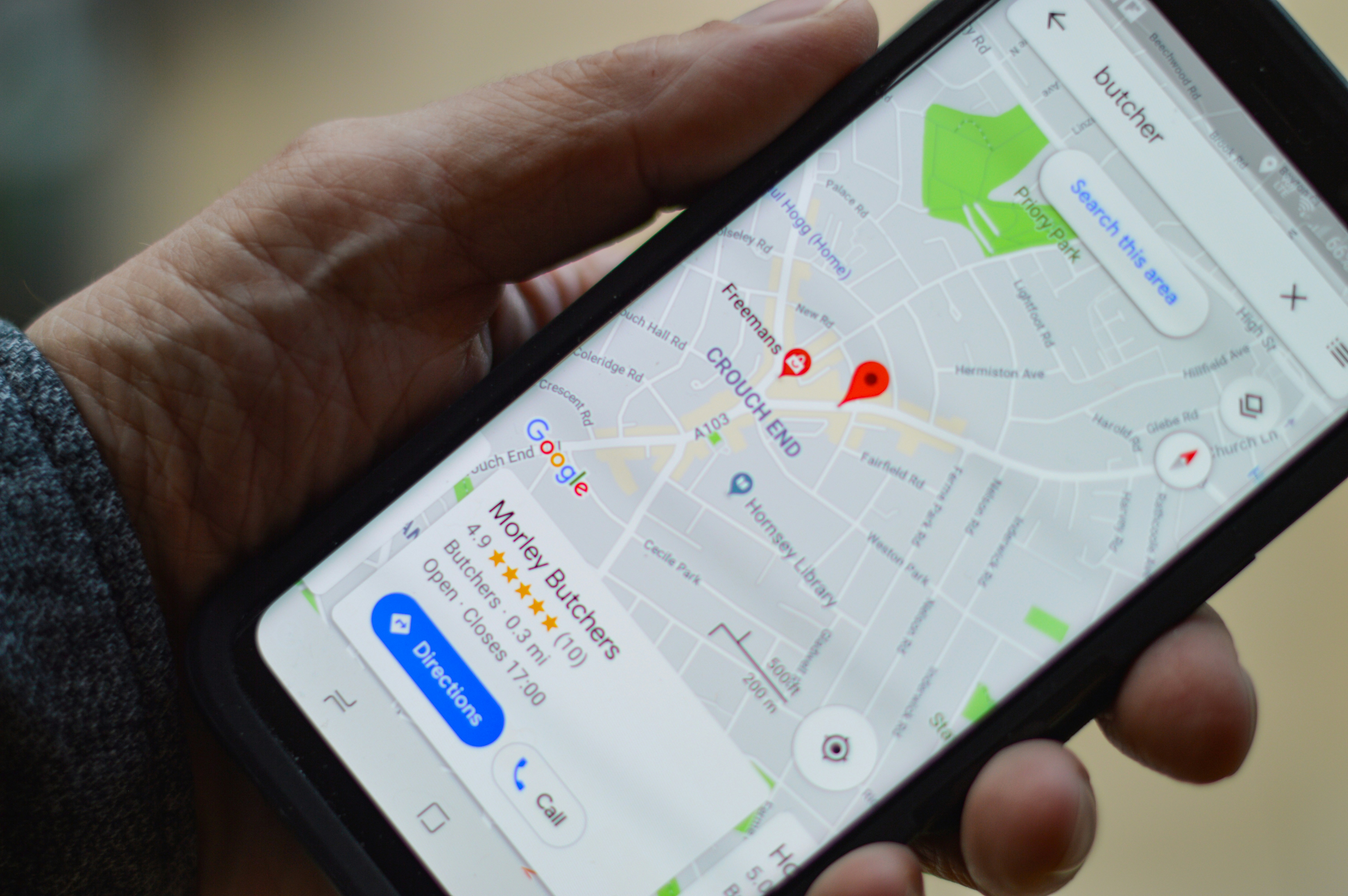
The Local Pack (Google Business Profile and Maps). This is the box showing three local business listings with star ratings, hours, a phone number, and a map. It appears for searches with local intent — things like “plumber near me” or “best electrician Colorado Springs.” It’s powered by Google Business Profile, a free listing you claim and manage. This is where most small businesses start, and rightly so.
Organic search results. These are the traditional blue links below the ads and the map pack. They’re earned through search engine optimization — built on website content that Google has crawled, indexed, and ranked. Organic results are the most trusted, most clicked, and most durable form of search visibility. They also take the most time and effort to build. But unlike ads, they don’t stop working the moment you stop paying for them.
Most small business owners either conflate these three or don’t know they’re separate. Each requires a different approach. And all three — in different ways — depend on having a real website.
Google Business Profile: Your Free Starting Point — and Its Limits
A Google Business Profile (formerly Google My Business) is the single most important free tool available to a local business. If you haven’t claimed yours, do it today. It takes about 15 minutes, requires a verified address or service area, and gives you immediate visibility in the local map pack for relevant searches in your area.
Your profile controls what appears when someone searches your business name directly: your hours, phone number, reviews, photos, services, and a link to your website. According to Google, businesses with complete and accurate profiles are significantly more likely to receive calls, direction requests, and website clicks than businesses with incomplete ones. Filling in every field matters.
But a Google Business Profile has a ceiling. It’s designed for local visibility around a specific address or service area. It won’t rank you for every keyword you care about, and it won’t get you into the organic search results below the map pack — those require indexed web pages that Google can read and rank.
There’s also a credibility problem. Your profile includes a website link. If that link goes nowhere, points to a Facebook page, or leads to a generic landing page with no real content, anyone who clicks it gets a poor first impression. A Google Business Profile without a website behind it is like a storefront with a door that opens onto a blank wall.
Why a Website Is the Foundation for All Three
Let’s look at what a website actually does for each of the three Google placements:
For Google Ads: When you run an ad, you’re paying to send people somewhere. That somewhere is your landing page. If the page is slow, vague, or hard to navigate, you’re paying for traffic that won’t convert. Google also factors in the quality of your landing page when calculating your ad’s Quality Score — which directly affects how much you pay per click. A strong, relevant website lowers your cost per click and raises your conversion rate. Running Google Ads without a proper website is burning money.
For Google Business Profile: Your website reinforces your GBP listing. If your profile says you’re a licensed roofer serving the Colorado Springs area, your website should say the same thing — with dedicated service pages, a clear service area, and contact information that matches your profile exactly. That consistency signals to Google that you’re a legitimate, established local business, not a spam listing. It also gives customers a place to go when they want to learn more before they call.
For organic search: This is where a website does its most important long-term work. Google crawls and indexes every page on your site — every service page, every blog post, every location page — and ranks them for relevant searches. A business with a well-built, properly optimized website can rank for dozens of search terms that would otherwise cost thousands of dollars per month in paid ads. None of this is possible without indexed pages. There is no organic search presence without a website. Full stop.
We went deeper on the ownership argument in Do Small Businesses Still Need a Website in 2026? — worth a read if you’re still weighing whether a website is necessary or just nice to have.
Organic Search: The Long Game Worth Playing
This is where we have to be straight with you: organic search rankings don’t happen overnight. A brand-new website on a brand-new domain will not rank on page one of Google for competitive terms in its first few months. That’s just how it works. The timeline is typically three to six months before a new site begins generating meaningful organic traffic, and results compound from there as your domain builds age and authority.
That timeline makes some people want to skip it entirely and just run ads. That’s the wrong call. Every business that ranks well organically today started somewhere, usually years ago. The businesses with the strongest organic presence now are the ones that put in the work early. Every month you wait is a month your competitors gain on you.
The content you put on your website accumulates. A service page about deck installation in Colorado Springs that you write today will still be answering that question two years from now, at no additional cost. Compare that to a Google Ad: the moment you stop paying, you disappear. Organic search builds an asset. Paid ads rent visibility. Both have a role, but only one of them compounds over time.
The Right Order of Operations
Given everything above, here’s the order we recommend to every small business owner starting from scratch:
1. Claim your Google Business Profile. It’s free and it’s the fastest path to local visibility. If you haven’t done this yet, go do it now and come back. Verify your address or service area, add hours, upload a few real photos, and fill in every field Google offers. A complete profile is a dramatically better profile.
2. Build a real website. Not a free website builder with a generic template and placeholder text. A properly built site with clear service pages, your location and service area stated explicitly, real contact information, and a page load time under three seconds. This is the foundation everything else is built on. We build these starting at $1,200.
3. Connect them. Link your Google Business Profile to your website. Make sure the business name, address, and phone number on your website match your GBP listing exactly — character for character. Consistency across both is a local SEO signal Google uses to verify that your business is real and established.
4. Add basic on-page SEO. Every page on your site needs a descriptive title tag, a meta description, and an H1 heading that reflects what the page is actually about. If you serve a specific geographic area, say so clearly on the page — not just in your GBP. Google ranks pages, not businesses.
5. Consider paid ads only after steps 1–4 are solid. Google Ads are a legitimate tool for generating traffic quickly while your organic rankings develop — but only when you have a destination worth sending people to. Run ads too early, before your site is ready, and you’re paying for clicks that won’t convert. The ads themselves may also cost more, since Google’s Quality Score penalizes poor landing pages.
The order matters. A lot of businesses get this backwards — they run ads first because ads feel fast, and they either skip the website or throw up something bare-bones as an afterthought. That approach costs more and converts less than doing things in the right sequence.
Frequently Asked Questions
Do I need a website to set up a Google Business Profile?
No — Google Business Profile doesn’t require a website. But without one, your profile has nowhere credible to send people. You can’t rank in organic search results, your ads have no landing page, and customers who want to learn more before calling have nothing to find. A Google Business Profile without a website behind it is an incomplete presence — and it shows.
How long does it take to show up on Google?
A Google Business Profile can appear in the local map pack within days to a few weeks of verification, depending on competition in your area. Organic search rankings for a new website take longer — typically three to six months before you see meaningful traffic, with results compounding over time as your domain builds authority. This is exactly why starting early matters. The sooner you have a site, the sooner the clock starts.
Should I run Google Ads before I have a website?
No. Ads require a destination — the landing page is where conversions actually happen. Sending ad traffic to a social media profile, a generic homepage with no clear call to action, or a slow site that takes five seconds to load wastes every dollar you spend. Google also charges you more for ads that point to low-quality pages. Build a proper website first, then consider ads once you have something worth sending people to.
How much does a website cost for a small business?
At Milestone Web Design, a professionally hand-coded website starts at $1,200 for a single-page site and $2,200 for a full 5-page site. Business-Class Hosting is $49.95 per month — a fully managed VPS built for business, not shared hosting — and includes free updates to existing content, monthly security patches, same-day priority support, and two business email accounts. That’s a complete, professional online presence for less than most businesses spend on a single month of Google Ads.