
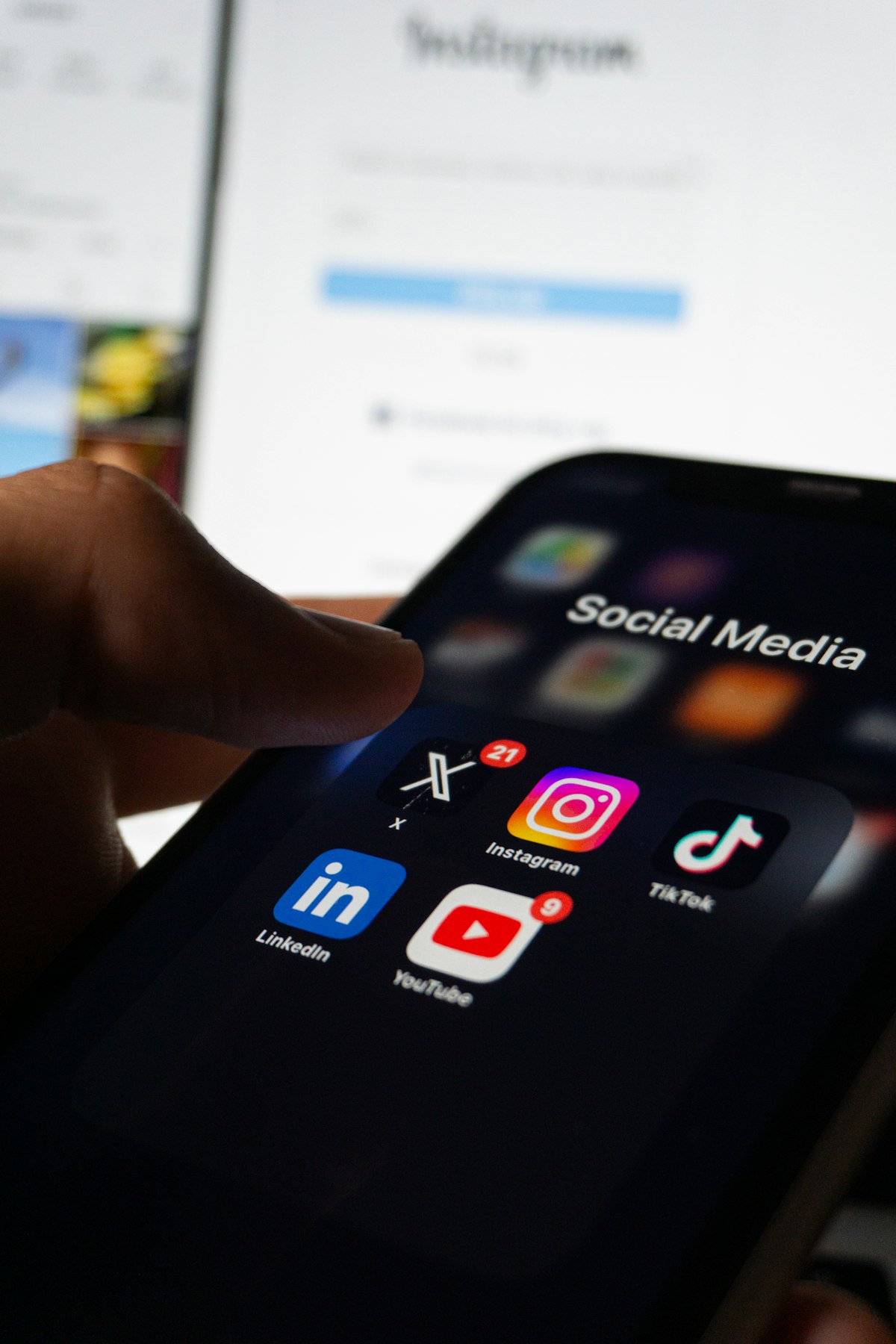
You just started a business. You need to be “online,” so you do what everyone tells you to do: open an Instagram account, start a Facebook business page, maybe grab a TikTok handle while you’re at it. It feels productive. It’s free, it’s fast, and within an hour you have a profile with your logo and a few photos. Problem solved, right?
Not quite. A social media profile is not a website, and treating it like one is one of the most common and most expensive mistakes a new business makes in its first year. Not expensive in dollars — expensive in the customers who went looking for you online, didn’t find what they needed, and quietly moved on to the next name on the list.
Why “Just Use Social Media” Feels Like the Obvious Move
We get why it’s tempting. Setting up a website feels like a project — it takes planning, it costs money, it requires decisions about domains and hosting and design that a brand-new business owner has never had to think about. A social profile takes ten minutes and zero dollars. When you’re juggling fifty other startup tasks, the path of least resistance wins.
It also feels like where the attention already is. Your friends are on Instagram. Your competitors post there. Everyone tells you social media is “how people find businesses now.” That part isn’t entirely wrong — social media is genuinely useful for staying visible to people who already know you. It’s just not the same job as a website, and the two get confused constantly.
You’re Building On Land You Don’t Own
Here’s the part that doesn’t get said enough: every post, every follower, every bit of effort you put into a social media page lives on a platform you do not control. Meta, TikTok, and every other platform can change the algorithm, change the rules, suspend your account over an automated flag you’ll never get a human to explain, or simply decide tomorrow that business pages see even less visibility than they do today. You have no vote in any of it.
And visibility on these platforms has already been shrinking for a long time — this isn’t a hypothetical risk, it’s the current reality. A 2026 analysis by Socialinsider, which studied more than 872,000 brand page posts, found average organic reach on Facebook business pages sitting at just 1.25% of followers. That means if you spend months building a following of 500 people, a typical post is reaching roughly six of them without paying for ads. Facebook’s own reach for business pages was around 16% back in 2012. The platform didn’t get worse at helping businesses by accident — it got worse because the business model shifted toward charging you for the reach you used to get for free.
A website doesn’t have that problem. Once it’s built, it’s yours. Nobody throttles how many of your own past visitors can find it again. Nobody can suspend it because an algorithm misread a photo. You can move hosts, change designers, redesign the whole thing — the asset stays yours the entire time.
Social Media Doesn’t Show Up Where People Actually Look
This is the part that surprises new business owners the most: a huge share of the people who will become your customers are never going to see your Instagram page at all, because they’re not looking for you on Instagram. They’re searching Google.
According to BrightLocal’s Local Consumer Review Survey, 98% of consumers used the internet to find information about a local business in the past year — up from 90% just a few years prior. That search almost always starts with a search engine, not a social app. Someone needing a plumber, a hairstylist, or a landscaper in their area types the service and their city into Google. What comes back is a map listing and a set of websites — not a feed of business Instagram accounts.
If your only presence online is a social profile, you’re invisible to nearly everyone making that search. A website — even a simple one — is the thing Google can actually index, rank, and show to someone typing “emergency plumber near me” at 9pm on a Tuesday. Social media was never built to do that job, and it still isn’t.
A Website Is What Makes You Look Like a Real Business
There’s a trust gap, too, and it runs in the opposite direction from what a lot of new owners assume. A polished Instagram grid can look impressive, but plenty of people — especially the ones about to hand over money for a service at their home — still check for a real website before they decide you’re a legitimate, established operation. No website at all raises a quiet question: is this a real business, or is this a side hustle that might not answer the phone next month?
A website signals permanence. It says you’ve invested in this being a real, lasting business, not a weekend project. That matters most in exactly the industries where trust decides the sale — contractors, home services, medical and wellness providers, anyone a customer is about to let into their home or their life. We see this constantly with the trades and local service businesses we build for across Colorado: the business that looks established online gets picked over the one that only exists as a social profile, even when the social-only business does the same quality of work.
What Actually Needs to Be on It Day One
None of this means a new business needs an elaborate ten-page site with a blog, a full portfolio, and a page for every possible service before launch. That’s the opposite mistake — waiting for perfect instead of shipping something real. The good news is that what actually needs to be true on day one is short:
- A clear statement of what you do and who you do it for. Someone landing on your homepage should know within five seconds whether you’re the business they’re looking for.
- A way to contact you that works instantly on a phone. A phone number that’s tap-to-call, not a number you have to copy and dial manually. This is where a huge number of brand-new sites quietly lose business — see our piece on what every new business website needs to get right in its first five seconds.
- Your service area, stated plainly. If you only serve Colorado Springs and the surrounding area, say so. It filters out the wrong leads and reassures the right ones that you’re local.
- Enough real content to look established. A few sentences about who runs the business, a handful of services clearly described, maybe one or two early customer photos or a review if you have one yet. You don’t need fifty projects in a portfolio — you need enough to not look empty.
- A Google Business Profile linked to the same information. The website and the map listing should match exactly — same name, same number, same address. Mismatches between the two actively hurt how Google trusts your listing.
That’s it. Five things, not fifty. A business that launches with those five things in place on a real website is already ahead of a huge share of new local competitors who skipped straight to social media and called it done. If you’re weighing whether you even need to spend on this before you have customers yet, we laid out the honest case for that timing question in whether small businesses still need a website in 2026 — the short answer is yes, and the sooner the better.
Social media still has a job to do. It’s a good place to post updates, show your work as you go, and stay visible to people who already know you exist. But it was never built to be found by strangers searching Google, and it was never built to be an asset you actually own. Build the website first. Let social media be the thing that points back to it.
Frequently Asked Questions
Can’t I just use Instagram or Facebook as my website for now?
You can, and plenty of new businesses do. But a social media profile is not a substitute for a website — it’s a rented storefront on someone else’s platform. You don’t control what it looks like, whether people find it in a Google search, or whether the platform changes its rules on you tomorrow. Use social media to build an audience. Use a website to own one.
I don’t have a logo or professional photos yet. Can I still launch a website?
Yes. A clean, well-written five-page site without a finished brand still beats no website at all, and it beats a social-only presence for anyone searching Google. You can always refine design and photography later. What you can’t recover is the months of search visibility and credibility you lose waiting for everything to feel perfect before you launch.
How much should a new business expect to spend on a first website?
At Milestone, our packages for a professionally built small business website start at $1,200. That buys a real, hand-coded site built to be found in search and to convert visitors into calls — not a do-it-yourself template you’ll outgrow in a year. It’s a modest one-time cost compared to what a business spends on almost anything else to get its first customers.
What should actually be on the site on day one if the business is brand new?
A clear description of what you do and who you do it for, a way to contact you that works on a phone with one tap, your service area, and enough honest detail that a stranger trusts you’re a real, established operation — even if you opened last month. You don’t need a blog, a portfolio of fifty projects, or a page for every possible service on day one. You need the basics done well.